
- The Engine receives a URL request from the Spider.
- The Engine asks the Scheduler to place the URL to be crawled in the queue.
- The Scheduler returns a Request to the Engine.
- The Engine sends the Request to the Downloader.
- The Downloader retrieves the Internet resource and returns the data to the Engine.
- The Engine receives the Response from the Downloader and sends it to the Spider for processing.
- The Spider returns processed data to the Engine and sends the next URL to the Engine at the same time.
- The Engine sends the processed data to the Item Pipelines for storage.
- The process repeats from step 3 until there are no new tasks.
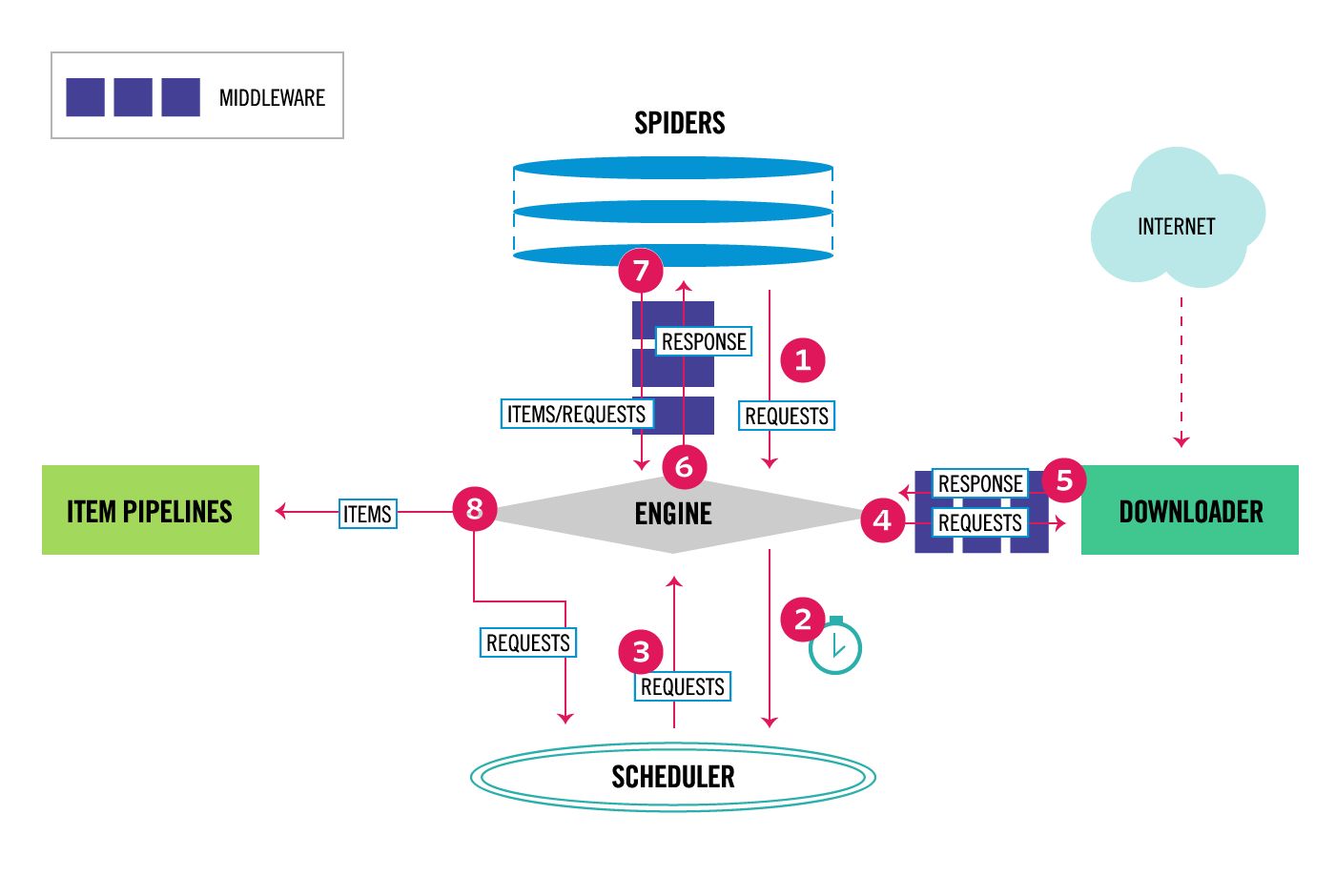
The data flow in Scrapy is controlled by the execution engine, and goes like this:
- The Engine gets the initial Requests to crawl from the Spider.
- The Engine schedules the Requests in the Scheduler and asks for the next Requests to crawl.
- The Scheduler returns the next Requests to the Engine.
- The Engine sends the Requests to the Downloader, passing through the Downloader Middlewares (see
process_request()). - Once the page finishes downloading the Downloader generates a Response (with that page) and sends it to the Engine, passing through the Downloader Middlewares (see
process_response()). - The Engine receives the Response from the Downloader and sends it to the Spider for processing, passing through the Spider Middleware (see
process_spider_input()). - The Spider processes the Response and returns scraped items and new Requests (to follow) to the Engine, passing through the Spider Middleware (see
process_spider_output()). - The Engine sends processed items to Item Pipelines, then send processed Requests to the Scheduler and asks for possible next Requests to crawl.
- The process repeats (from step 3) until there are no more requests from the Scheduler.
